

Hey there! As a supplier of EPGC201 glass epoxy laminate, I often get asked if this material can be used in nuclear applications. It's a really interesting question, and one that I'm more than happy to dive into with you all.

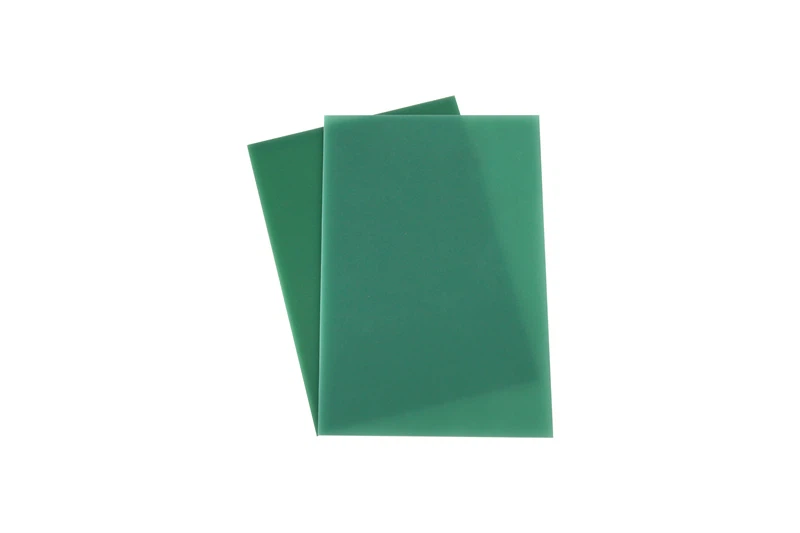
First off, let's talk a bit about what EPGC201 glass epoxy laminate is. It's a type of composite material made up of glass fibers and an epoxy resin matrix. This combination gives it some pretty cool properties. It's got good mechanical strength, which means it can handle a fair amount of stress without breaking. It also has decent electrical insulation properties, making it useful in a bunch of electrical and electronic applications.
Now, when it comes to nuclear applications, things get a bit more complex. Nuclear environments are harsh, to say the least. There are high levels of radiation, extreme temperatures, and sometimes even high pressures. So, for a material to be used in these settings, it needs to be able to withstand all these factors.
Let's start with radiation resistance. Radiation can cause a lot of damage to materials. It can break chemical bonds, change the structure of the material, and even cause it to degrade over time. EPGC201 glass epoxy laminate does have some level of radiation resistance, but it's not infinite. The epoxy resin in the laminate can be affected by radiation, especially high - energy radiation like gamma rays. Over time, the resin may start to break down, which can lead to a loss of mechanical and electrical properties.
However, the glass fibers in the laminate are more resistant to radiation. Glass is a relatively stable material and can withstand a fair amount of radiation exposure. So, the overall radiation resistance of EPGC201 depends on the balance between the glass fibers and the epoxy resin. In some low - radiation nuclear applications, EPGC201 might be able to hold up just fine. For example, in areas where the radiation levels are not extremely high, such as in some control rooms or less critical parts of a nuclear facility, it could potentially be used.
Next, let's consider temperature. Nuclear reactors can reach very high temperatures, and materials need to be able to maintain their properties under these conditions. EPGC201 has a certain temperature limit. If the temperature gets too high, the epoxy resin can start to soften or even decompose. This can cause the laminate to lose its strength and shape. In normal operating conditions of some nuclear applications, if the temperature is within the acceptable range for EPGC201, it can work well. But in areas close to the reactor core where temperatures are extremely high, it's probably not the best choice.
Pressure is another factor. In some parts of a nuclear facility, there can be high pressures. EPGC201 has good mechanical strength, but it has its limits. If the pressure is too high, it could cause the laminate to crack or deform. So, when considering using EPGC201 in a nuclear application, the pressure conditions need to be carefully evaluated.
Now, let's compare EPGC201 with some other similar materials. We have the G10 Epoxy Laminate Sheet. G10 is also a glass epoxy laminate. It has similar properties to EPGC201 in terms of mechanical strength and electrical insulation. However, its performance in nuclear applications might be different. G10 may have a different radiation resistance profile and temperature tolerance compared to EPGC201.
Then there's the FR - 5 Epoxy Laminate Sheet. FR - 5 is known for its flame - retardant properties. In a nuclear application, fire safety is always a concern. While EPGC201 may not have the same level of flame retardancy as FR - 5, it could still be used in areas where fire risk is relatively low.
Another option is the EPGC308 Epoxy Laminate Sheet. EPGC308 might have different characteristics that make it more suitable for certain nuclear applications. It could have better high - temperature performance or higher radiation resistance compared to EPGC201.
So, can EPGC201 glass epoxy laminate be used in nuclear applications? The answer is, it depends. In some specific, less - demanding nuclear scenarios, it could potentially be a viable option. But in more extreme conditions, other materials might be a better choice.
If you're involved in a nuclear project and are considering using EPGC201, I'd highly recommend conducting thorough testing. You need to evaluate how the material will perform under the specific radiation, temperature, and pressure conditions of your application. This can involve laboratory tests and simulations to get a better understanding of its long - term performance.
As a supplier, I'm here to help you make the right decision. I can provide you with samples of EPGC201 for testing and offer technical support throughout the process. If you have any questions about the material or its suitability for your nuclear application, don't hesitate to reach out. We can have a detailed discussion and figure out if EPGC201 is the right fit for you.
If you're interested in purchasing EPGC201 glass epoxy laminate or want to discuss further about its potential use in your nuclear project, feel free to contact me. We can start a conversation about your requirements and see how we can work together.
References
- Handbook of Composite Materials for Nuclear Applications
- Research Papers on the Radiation Resistance of Epoxy - Based Composites
- Technical Specifications of EPGC201, G10, FR - 5, and EPGC308 Glass Epoxy Laminates