

Can epoxy machining parts be used in high - temperature environments?
Hey there! As a supplier of epoxy machining parts, I often get asked this question: Can epoxy machining parts be used in high - temperature environments? Well, let's dig into this topic and find out.
First off, let's understand what epoxy machining parts are. Epoxy is a type of thermosetting polymer that's known for its excellent adhesion, chemical resistance, and mechanical properties. We use it to make all sorts of parts through machining processes like CNC (Computer Numerical Control). You can check out our Customized Epoxy CNC Parts if you're interested in seeing what we can offer.
Now, when it comes to high - temperature environments, things get a bit tricky. Epoxy has its limits. Generally, most standard epoxy materials start to show some changes in their properties when exposed to high temperatures.
One of the main issues is thermal expansion. Epoxy, like most materials, expands when heated. In a high - temperature environment, if the epoxy part is not properly designed or if it's constrained in a way that doesn't allow for expansion, it can lead to internal stresses. These stresses can cause cracking, warping, or even a complete failure of the part.
Another problem is the degradation of the epoxy itself. At high temperatures, the chemical bonds in the epoxy can start to break down. This can result in a loss of strength, adhesion, and other important properties. For example, if an epoxy part is used to bond two components together, the high temperature might weaken the bond, causing the components to separate.
However, it's not all doom and gloom. There are some types of epoxy that are formulated to withstand higher temperatures. These are often called high - temperature epoxies. They have special additives and chemical structures that make them more heat - resistant.

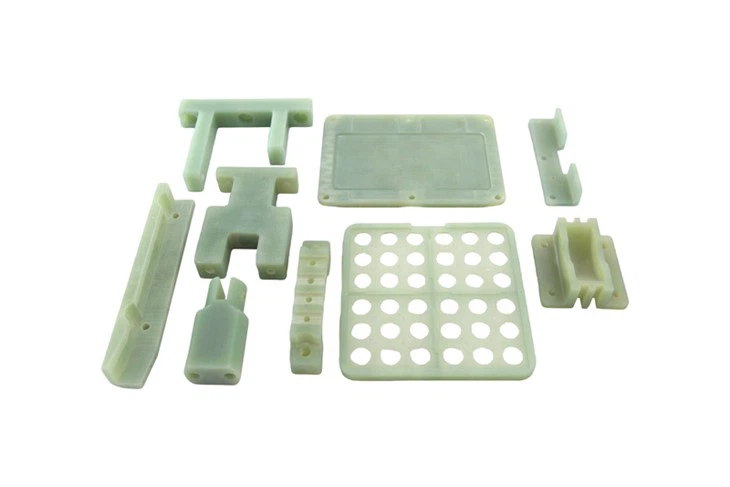
High - temperature epoxies can typically withstand temperatures ranging from 150°C to 260°C (302°F to 500°F), depending on the specific formulation. Some advanced formulations can even go beyond these temperatures for short periods. But even these high - temperature epoxies have their limits, and they need to be used within their specified temperature ranges.
When considering using epoxy machining parts in high - temperature environments, you also need to think about the duration of the high - temperature exposure. A short - term exposure to high temperatures might not cause as much damage as a long - term, continuous exposure. For example, if an epoxy part is used in a manufacturing process where it's only exposed to high temperatures for a few seconds during a specific operation, it might be able to handle it better than if it's constantly exposed to the same temperature.
Let's talk about some real - world applications. In the aerospace industry, epoxy parts are sometimes used in areas where the temperature can get quite high, but they're carefully engineered to withstand those conditions. The same goes for the automotive industry, especially in parts near the engine or exhaust system.
But it's not just about the high - temperature performance of the epoxy itself. The design of the part also plays a crucial role. A well - designed part takes into account the thermal expansion and contraction of the epoxy. It might have features like expansion joints or be made in a way that allows for some flexibility.
If you're in a situation where you need epoxy machining parts for a high - temperature application, we can help. We offer Customized Epoxy Machining Parts where we can work with you to select the right type of epoxy and design the part to meet your specific needs.
We have a team of experts who are well - versed in the properties of different epoxies and how they behave in high - temperature environments. We can conduct tests and simulations to ensure that the part will perform as expected.
In conclusion, while standard epoxy machining parts might not be suitable for high - temperature environments, there are high - temperature epoxies that can be used with proper design and engineering. If you're thinking about using epoxy parts in a high - temperature situation, don't hesitate to reach out to us. We can discuss your requirements, recommend the best solutions, and provide you with high - quality customized parts.
If you're interested in learning more or starting a project with us, just let us know. We're here to make sure you get the right epoxy machining parts for your high - temperature needs.
References
- "Handbook of Epoxy Resins" by Henry Lee and Kris Neville
- Various industry reports on high - temperature materials and their applications