

As a supplier of epoxy machining parts, ensuring the accuracy of these parts is of utmost importance. Epoxy machining parts are widely used in various industries, including electronics, automotive, and aerospace, where precision is crucial for the proper functioning of the final products. In this blog post, I will share some key strategies and practices that we implement to guarantee the accuracy of our epoxy machining parts.
1. Advanced Equipment and Technology
One of the fundamental factors in achieving high - accuracy epoxy machining is the use of advanced equipment. We invest in state - of - the - art CNC (Computer Numerical Control) machines. These machines offer several advantages over traditional machining methods. Firstly, they are programmed with high - precision software that can control the movement of cutting tools with extreme accuracy. For example, our CNC mills can position the cutting tool within a tolerance of ±0.001 inches, which is essential for creating complex and precise epoxy parts.
Moreover, modern CNC machines are equipped with high - speed spindles and advanced cutting tools. The high - speed spindles allow for faster material removal rates while maintaining accuracy. The cutting tools are made from high - quality materials such as carbide, which can withstand the high forces and temperatures generated during the machining process. This ensures that the cutting edges remain sharp, resulting in cleaner cuts and more accurate parts.
2. Skilled and Experienced Workforce
Even the most advanced equipment requires a skilled operator to achieve optimal results. Our team of machinists has extensive experience in working with epoxy materials. They are trained to understand the unique properties of epoxy, such as its hardness, brittleness, and thermal expansion characteristics. This knowledge allows them to select the appropriate machining parameters, such as cutting speed, feed rate, and depth of cut.
For instance, if the cutting speed is too high, it can cause excessive heat generation, which may lead to thermal deformation of the epoxy part. On the other hand, if the feed rate is too low, it can result in longer machining times and increased tool wear. Our machinists are able to strike the right balance based on their experience and knowledge of the material.
In addition to technical skills, our workforce also has a strong attention to detail. They perform regular inspections during the machining process to ensure that the parts are meeting the required specifications. Any deviations are immediately addressed, either by adjusting the machining parameters or making minor modifications to the toolpath.
3. Rigorous Quality Control Processes
Quality control is an integral part of our manufacturing process. We have a comprehensive quality control system in place that starts from the raw material inspection and continues through to the final product inspection.
When we receive the raw epoxy materials, we conduct a series of tests to ensure their quality. This includes checking the material's density, hardness, and chemical composition. Only materials that meet our strict quality standards are used in the production process.
During the machining process, we use a variety of inspection tools, such as calipers, micrometers, and coordinate measuring machines (CMMs). Calipers and micrometers are used for quick and simple measurements, while CMMs are used for more complex and precise measurements. CMMs can measure the dimensions of a part in three - dimensional space with high accuracy, allowing us to detect even the slightest deviations from the design specifications.
Once the parts are machined, they undergo a final inspection. This involves a thorough visual inspection to check for any surface defects, such as scratches, cracks, or burrs. The parts are also measured again using the inspection tools to ensure that they are within the specified tolerances. Only parts that pass all the quality control checks are packaged and shipped to our customers.
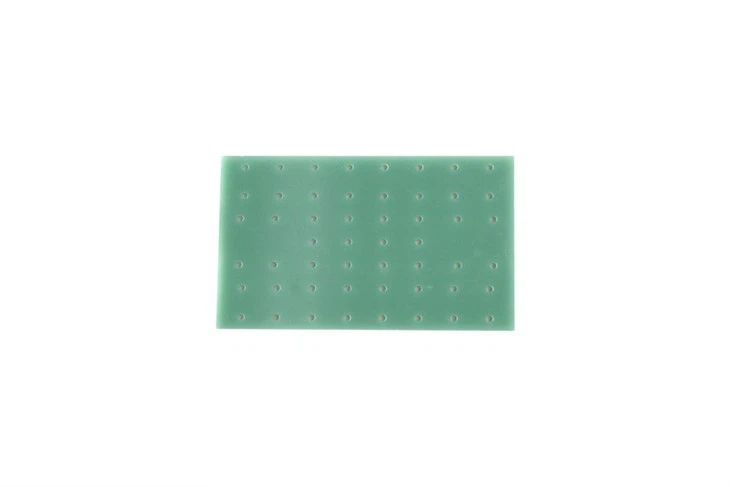

4. Customized Machining Solutions
We understand that different customers have different requirements for their epoxy machining parts. That's why we offer Customized Epoxy Machining Parts. Our engineering team works closely with customers to understand their specific needs and design custom - made solutions.
When designing a customized part, we take into account factors such as the part's function, the environment in which it will be used, and the manufacturing process. For example, if a part is going to be used in a high - temperature environment, we may select a special type of epoxy material with better heat resistance.
We also use advanced CAD/CAM (Computer - Aided Design/Computer - Aided Manufacturing) software to create detailed 3D models of the parts. These models are then used to generate the toolpaths for the CNC machines. This ensures that the parts are machined exactly as designed, with high accuracy and precision.
5. Continuous Improvement
In the manufacturing industry, continuous improvement is essential to stay competitive. We are constantly looking for ways to improve our processes and enhance the accuracy of our epoxy machining parts.
We regularly review our machining processes and quality control procedures. Based on the feedback from our customers and the data collected from our inspections, we identify areas for improvement. For example, if we notice a recurring issue with a particular type of part, we will conduct a root - cause analysis to determine the underlying cause and implement corrective actions.
We also invest in research and development to explore new materials and machining techniques. This allows us to offer our customers better - quality products and more innovative solutions. For instance, we are currently researching the use of new epoxy composites that offer improved mechanical properties and better machinability.
6. Material Selection
The choice of epoxy material plays a significant role in the accuracy of the machining parts. Different epoxy materials have different properties, such as hardness, strength, and shrinkage rate. We carefully select the epoxy material based on the specific requirements of the part.
For parts that require high strength and stiffness, we may choose a high - performance epoxy resin. On the other hand, for parts that need to be machined with high precision, we select an epoxy material with low shrinkage during curing. This helps to minimize dimensional changes after machining, ensuring that the parts maintain their accuracy over time.
We also work closely with our material suppliers to ensure the consistency of the raw materials. Consistent material properties are essential for achieving consistent machining results.
Conclusion
Ensuring the accuracy of epoxy machining parts is a multi - faceted process that involves advanced equipment, a skilled workforce, rigorous quality control, customized solutions, continuous improvement, and proper material selection. As a supplier, we are committed to providing our customers with high - quality, accurate epoxy machining parts. If you are in need of Customized Epoxy CNC Parts, please feel free to contact us for a consultation and to discuss your specific requirements. We look forward to working with you to meet your epoxy machining needs.
References
- "Machining of Polymer Composites" by P. K. Mallick
- "Handbook of Epoxy Resins" by Henry Lee and Kris Neville
- "CNC Machining Technology" by John A. Reha