

Selecting the appropriate cutting tools for polyester machining parts is a crucial decision that can significantly impact the quality, efficiency, and cost-effectiveness of the manufacturing process. As a seasoned supplier of polyester machining parts, I understand the intricacies involved in this selection process. In this blog, I'll share some insights and guidelines to help you make the right choice.
Understanding Polyester Material Properties
Before delving into cutting tool selection, it's essential to understand the properties of polyester. Polyester is a thermoplastic polymer known for its high strength, good chemical resistance, and dimensional stability. However, it also has a relatively low melting point and can be prone to heat generation during machining. These characteristics influence the choice of cutting tools and machining parameters.

Types of Cutting Tools for Polyester Machining
End Mills
End mills are one of the most commonly used cutting tools for polyester machining. They come in various shapes and sizes, including square end, ball end, and corner radius end mills. Square end mills are ideal for flat surface machining, while ball end mills are suitable for contouring and 3D machining. Corner radius end mills offer a balance between the two, providing a smoother finish and reducing the risk of chipping at the corners.

When selecting an end mill for polyester machining, consider the following factors:
- Material: High-speed steel (HSS) end mills are a cost-effective option for general-purpose machining. However, for more demanding applications or high-volume production, carbide end mills are preferred due to their superior hardness and wear resistance.
- Coating: A coated end mill can significantly improve tool life and performance. Titanium nitride (TiN), titanium carbonitride (TiCN), and aluminum titanium nitride (AlTiN) are some common coatings used for polyester machining. These coatings reduce friction, heat generation, and tool wear, resulting in a smoother finish and longer tool life.
- Flute Design: The number and shape of flutes on an end mill affect chip evacuation and cutting performance. For polyester machining, a two or three-flute end mill is typically recommended. Two-flute end mills are suitable for roughing operations, while three-flute end mills provide a better finish and are more efficient for finishing operations.
Drills
Drilling is another common operation in polyester machining. When selecting a drill for polyester, consider the following:

- Point Angle: A drill with a 118° or 120° point angle is suitable for most polyester materials. This point angle provides a good balance between cutting efficiency and drill life.
- Helix Angle: A high helix angle (e.g., 30° - 40°) is recommended for polyester drilling. The high helix angle helps to evacuate chips more effectively, reducing the risk of chip clogging and improving drilling performance.
- Coating: Similar to end mills, coated drills can offer better performance and longer tool life. TiN and TiCN coatings are commonly used for polyester drilling.
Router Bits
Router bits are used for shaping and profiling polyester parts. They come in various shapes and sizes, including straight bits, flush trim bits, and rounding-over bits. When selecting a router bit for polyester machining, consider the following:
- Cutting Edge Geometry: The cutting edge geometry of a router bit affects the quality of the cut and the amount of heat generated. A sharp cutting edge with a positive rake angle is recommended for polyester machining to reduce cutting forces and heat generation.
- Shank Size: The shank size of the router bit should match the collet size of the router. A proper fit ensures accurate and stable machining.
- Coating: Coated router bits can provide better performance and longer tool life, especially for high-speed machining.
Factors to Consider When Selecting Cutting Tools
Machining Operation
The type of machining operation (e.g., milling, drilling, turning) plays a significant role in cutting tool selection. Different operations require different cutting tool geometries and materials. For example, end mills are suitable for milling operations, while drills are used for drilling holes.
Material Thickness and Hardness
The thickness and hardness of the polyester material also affect cutting tool selection. Thicker materials may require more robust cutting tools with higher cutting forces, while harder materials may require carbide or coated cutting tools to withstand the wear.
Surface Finish Requirements
The desired surface finish of the polyester part is another important factor to consider. For a smooth surface finish, a finishing tool with a fine cutting edge and a high cutting speed is recommended. On the other hand, for roughing operations, a tool with a larger cutting edge and a lower cutting speed may be more suitable.
Machining Efficiency
Machining efficiency is crucial for reducing production costs. To improve machining efficiency, select cutting tools that can remove material quickly and accurately. This may involve choosing tools with a high feed rate and a high cutting speed, as well as optimizing the machining parameters.
Our Customized Polyester Machining Solutions
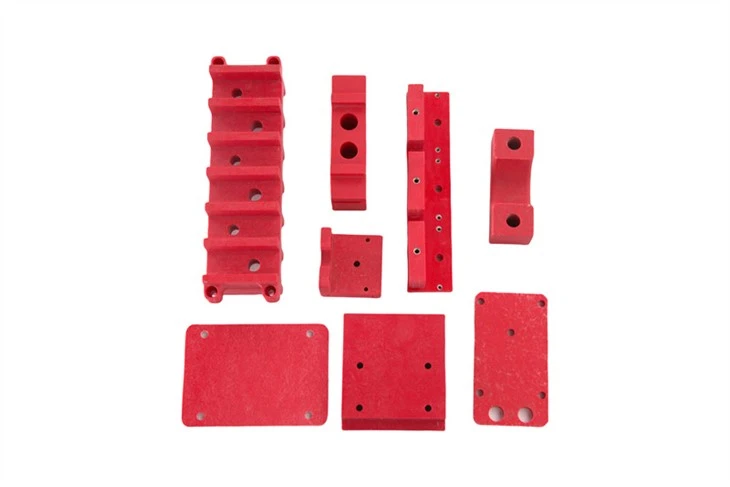
As a supplier of polyester machining parts, we offer a wide range of Customized Polyester CNC Parts and Customized Polyester Machining Parts. Our experienced team can help you select the appropriate cutting tools and machining parameters based on your specific requirements. We use state-of-the-art CNC machining equipment and high-quality cutting tools to ensure the precision and quality of our parts.
Contact Us for Your Polyester Machining Needs
If you're looking for a reliable supplier of polyester machining parts, we'd love to hear from you. Whether you need a single prototype or high-volume production, we have the expertise and capabilities to meet your needs. Contact us today to discuss your project and get a quote.
References
- "Machining of Polymers" by John A. Schey
- "Cutting Tool Technology" by David A. Dornfeld