

Polyester machining parts have gained significant popularity in various industries due to their versatility, durability, and cost - effectiveness. As a supplier of polyester machining parts, I often receive inquiries about the fire - resistance properties of these components. In this blog, I will delve into the fire - resistance characteristics of polyester machining parts, exploring the factors that influence them and the implications for different applications.
Understanding Polyester and Its Basics
Polyester is a synthetic polymer that is widely used in the manufacturing of various products, including fibers, films, and plastics. In the context of machining parts, polyester is often chosen for its excellent mechanical properties, such as high strength, good dimensional stability, and resistance to wear and chemicals.
The basic structure of polyester consists of ester functional groups (-COO-) linked together in a long - chain polymer. This structure gives polyester its characteristic properties, but it also plays a role in its fire - resistance behavior. When exposed to high temperatures, the ester bonds in polyester can start to break down, releasing volatile compounds and potentially leading to combustion.
Fire - Resistance Mechanisms of Polyester Machining Parts
The fire - resistance of polyester machining parts can be attributed to several mechanisms. One of the primary factors is the use of flame - retardant additives. These additives are incorporated into the polyester resin during the manufacturing process to enhance its resistance to ignition and flame spread.
Flame - retardant additives work through different mechanisms. Some additives act by releasing non - combustible gases when heated. These gases dilute the oxygen in the surrounding environment, making it more difficult for the polyester to burn. For example, halogen - based flame retardants, such as brominated and chlorinated compounds, release halogen radicals when exposed to heat. These radicals react with the free radicals involved in the combustion process, interrupting the chain reaction and suppressing the flame.
Another type of flame - retardant additive is the intumescent type. Intumescent additives form a protective char layer on the surface of the polyester when heated. This char layer acts as a barrier, insulating the underlying material from the heat and oxygen, and reducing the rate of heat transfer and combustion.
Factors Affecting Fire - Resistance
Several factors can affect the fire - resistance properties of polyester machining parts. The type and amount of flame - retardant additive used are crucial. Different additives have different levels of effectiveness, and the optimal amount needs to be carefully determined to achieve the desired fire - resistance rating.

The thickness of the polyester part also plays a role. Thicker parts generally have better fire - resistance than thinner ones because they can absorb more heat before reaching the ignition temperature. Additionally, the density of the polyester material can influence its fire - resistance. Higher - density polyesters may have better insulation properties, which can slow down the spread of fire.
The manufacturing process can also impact fire - resistance. For example, if the polyester is not properly mixed with the flame - retardant additive during the compounding process, the fire - resistance performance may be compromised. Inconsistent distribution of the additive can lead to areas with lower fire - resistance, increasing the risk of ignition and flame spread.
Fire - Resistance Ratings and Standards
There are several international and national standards for evaluating the fire - resistance of materials, including polyester machining parts. One of the most commonly used standards is the UL 94 standard, developed by Underwriters Laboratories. The UL 94 standard classifies materials based on their flammability and burning characteristics.
The UL 94 ratings range from V - 0 (the highest level of fire - resistance) to HB (the lowest). A V - 0 rated material will extinguish within 10 seconds after the ignition source is removed, and no flaming drips are allowed. In contrast, an HB rated material burns at a slow rate and is considered to have a relatively low level of fire - resistance.
When selecting polyester machining parts, it is important to consider the specific fire - resistance requirements of the application. For applications in high - risk environments, such as electrical enclosures or aerospace components, parts with a high UL 94 rating are often required.
Applications and Fire - Resistance Requirements
Polyester machining parts are used in a wide range of applications, each with its own fire - resistance requirements. In the electrical industry, polyester parts are commonly used in circuit breakers, switches, and insulation components. These parts need to have good fire - resistance to prevent electrical fires and ensure the safety of the electrical system.
In the automotive industry, polyester machining parts can be found in interior components, such as dashboards and door panels. Fire - resistance is an important consideration in these applications to reduce the risk of fire in the event of an accident or electrical malfunction.

In the construction industry, polyester parts may be used in building facades, insulation, and structural components. Meeting the fire - resistance standards is essential to comply with building codes and ensure the safety of the occupants.
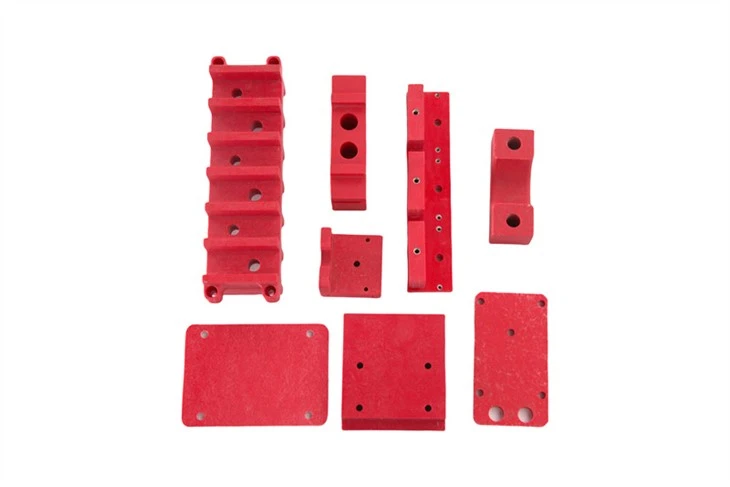
Our Offerings as a Polyester Machining Parts Supplier
As a supplier of polyester machining parts, we understand the importance of fire - resistance in different applications. We offer a wide range of Customized Polyester CNC Parts and Customized Polyester Machining Parts that can be tailored to meet specific fire - resistance requirements.
Our manufacturing process ensures the proper incorporation of flame - retardant additives, resulting in parts with consistent and reliable fire - resistance performance. We work closely with our customers to understand their needs and provide solutions that meet or exceed the required fire - resistance standards.
Conclusion
The fire - resistance properties of polyester machining parts are influenced by various factors, including the type of flame - retardant additive, the thickness and density of the part, and the manufacturing process. Understanding these factors is crucial for selecting the right polyester parts for different applications and ensuring the safety of the end - use products.
As a supplier, we are committed to providing high - quality polyester machining parts with excellent fire - resistance. If you have specific requirements for polyester parts in terms of fire - resistance or other properties, we encourage you to contact us for a detailed discussion and to explore how our products can meet your needs. We look forward to the opportunity to work with you and contribute to the success of your projects.
References
- “Flame Retardancy of Polymeric Materials” by Charles A. Wilkie and Ellen M. Stein
- UL 94 Standard for Safety of Flammability of Plastic Materials for Parts in Devices and Appliances