

Hey there! As a supplier of epoxy machining parts, I often get asked about the specific heat capacity properties of these parts. It's a crucial topic, especially for those in industries where temperature control and heat management are key. So, let's dive right in and explore what makes the specific heat capacity of epoxy machining parts so important.
First off, what is specific heat capacity? Well, it's the amount of heat energy required to raise the temperature of a unit mass of a substance by one degree Celsius. In simpler terms, it tells us how much heat a material can absorb before its temperature starts to go up. For epoxy machining parts, this property plays a huge role in their performance and durability.
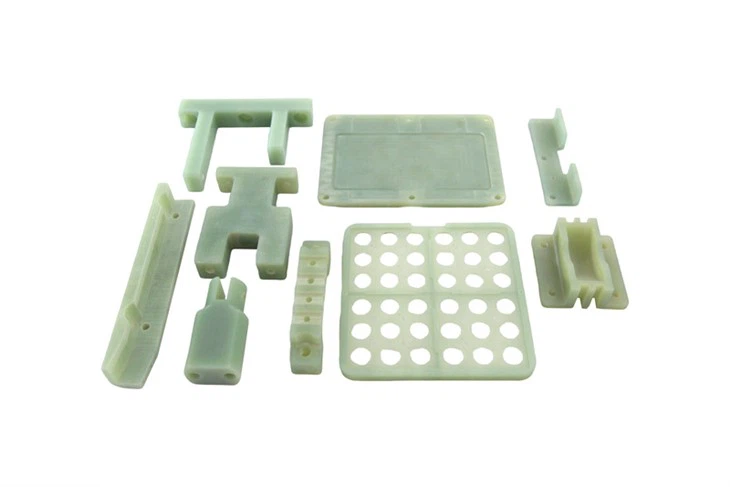

Epoxy is a type of polymer that's known for its excellent mechanical and chemical properties. When it comes to specific heat capacity, epoxy generally has a relatively low value compared to some metals. This means that it doesn't require a large amount of heat to increase its temperature. On one hand, this can be an advantage in applications where you want quick heating or cooling. For example, in electronic devices, epoxy parts can respond rapidly to changes in temperature, which is great for efficient thermal management.
However, the low specific heat capacity can also be a drawback in some situations. In high - heat environments, epoxy parts may heat up quickly and reach their maximum operating temperature faster than materials with higher specific heat capacities. This can lead to issues like thermal expansion, which might cause the parts to warp or lose their dimensional stability. And if the temperature gets too high, the epoxy can even start to degrade, losing its strength and other desirable properties.
One of the factors that can affect the specific heat capacity of epoxy machining parts is the formulation of the epoxy itself. Different epoxy resins have different chemical compositions, and additives can also be used to modify the properties of the epoxy. For instance, some fillers can be added to increase the specific heat capacity of the epoxy. These fillers can act as heat sinks, absorbing more heat and helping to keep the temperature of the part more stable.
Another important aspect is the manufacturing process. How the epoxy parts are machined can influence their specific heat capacity. For example, if the parts are machined with a lot of heat generated during the process, it can cause some changes in the internal structure of the epoxy, which might in turn affect its specific heat capacity. Proper machining techniques, such as using coolants and appropriate cutting speeds, can help minimize these heat - related effects.
Now, let's talk about how these specific heat capacity properties impact the applications of epoxy machining parts. In the aerospace industry, for example, weight is a critical factor. Epoxy parts are often used because they are lightweight, but their low specific heat capacity needs to be carefully considered. In high - speed flight, the friction with the air can generate a lot of heat. Engineers need to design the epoxy parts in such a way that they can handle the heat without failing. This might involve using special coatings or integrating heat - dissipating structures.
In the automotive industry, epoxy parts are used in various components, from electrical connectors to interior trim. The specific heat capacity of these parts is important for ensuring reliable performance. In the engine compartment, where temperatures can be extremely high, epoxy parts need to be able to withstand the heat without deforming or breaking down. And in the electrical systems, proper thermal management is essential to prevent overheating of the components.
If you're in the market for Customized Epoxy Machining Parts, understanding the specific heat capacity properties is crucial. It can help you choose the right epoxy formulation and machining process for your specific application. And if you need parts with very specific thermal requirements, we can work with you to develop Customized Epoxy CNC Parts that meet those needs.
We have a team of experts who are well - versed in the properties of epoxy and can guide you through the selection and manufacturing process. Whether you need parts for a high - heat application or something that needs to respond quickly to temperature changes, we've got the knowledge and experience to deliver the right solution.
If you're interested in learning more about our epoxy machining parts or want to discuss your specific requirements, don't hesitate to reach out. We're here to help you find the best epoxy parts for your project, taking into account all the important factors, including specific heat capacity.
References
- "Polymer Science and Engineering" - A comprehensive textbook on polymer properties, including epoxy resins.
- Industry reports on the use of epoxy parts in aerospace and automotive applications.